Soup
11 entries
Tadasuke Tomita is the force behind an incredible Japanese-language website called Shiro Gohan ("white rice"). A self-described food enthusiast and now cookbook author, he writes that he created the site "to help people recognize the deliciousness of washoku" (traditional Japanese food).
It's always a pleasure to hang out in the kitchen with Atsushi and watch him in action--and you can see what I mean for yourself on May 16th, when Atsushi will teach a Japanese breakfast class at the Brooklyn Kitchen. It's going to be an amazing evening. I hope you can make it.

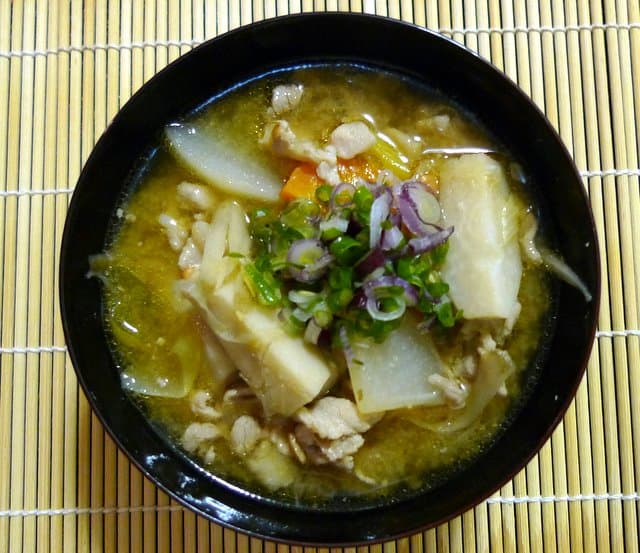
Last night a bunch of hungry souls joined me at EN Japanese Brasserie to experience an amazing meal based on classic makanai, or staff meal, cooking. A highlight was Chef Abe's delicious butajiru, or traditional pork miso soup, the recipe of which he graciously shared with me, below.
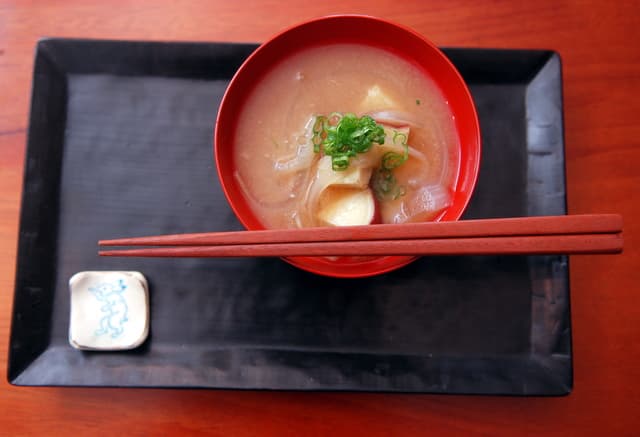
In Japan, miso soup reflects the full bounty, breath, spontaneity and endless creativity of the cuisine -- the varieties are mind boggling and delicious. Case in point, the list that follows, sixty six miso soups that a Japanese cookbook editor and fabulous cook named Nobuko-san just sent me.
A few weeks ago I kicked off the Miso Soup Project, an occasional series about this versatile, healthy, elemental and, of course, supremely delicious Japanese dish. To learn more, I visited the remarkable Hiroko Shimbo, Japanese food authority and author of The Japanese Kitchen, The Sushi Experience, among other terrific books. Hiroko graciously invited me to her kitchen to teach me about miso soup, and show me how to cook three tasty versions. Here's our interview:
I read somewhere that at one time, Japanese consumed a hundred bowls of miso soup a month, on average. A whole lot of soup! But for good reason, because miso is truly a remarkable food:
On his last morning at my apartment, Atsushi explained this dish to me. First, let's talk about iriko dashi, a traditional dashi prepared from small dried fish. While konbu and katsuobushi dashi is intricate and involved, iriko dashi is the opposite: Totally simple to make.
This dish, like the konbu dashi soup with clams, once agan demonstrates the power of konbu, which infuses water with an irresistible savoriness or umami to serve as a flavor foundation for other ingredients. In this case, Atsushi prepared a simple soup with egg and scallion that was fast to prepare and extremely tasty.
A simple soup that evokes the ideas of mottainai and the power of konbu: Atsushi collected turnip peels and scrap pieces of carrot from preparing other dishes and added them to a pot of water with a piece of konbu in it. He turned on the heat and cooked it until the konbu gave off a pleasing aroma, then strained the liquid. In the meantime, Atsushi sliced a handful of snow peas on the diagonal.
Let's talk about how to make a dashi before we get to this simple, delicious soup. Everything I've read about preparing konbu-katsuobushi dashi (kelp and dried, shaved bonito) says to first add the konbu to a pot of water and bring it to just a boil, then to remove the konbu before the water starts to really boil. Atsushi took a totally different approach.
One of the many things I love about Nakahigashi Restaurant is how Mr. Nakahigashi can bring out the sublime natural flavors of ingredients even though he does very little to them. Atsushi expressed this idea in a simple clam soup with just three ingredients: Clams, water and umami-rich konbu. Actually, when he explained what he was about to cook, I suggested he add a little yuzu citrus peel to give the soup another layer of flavor. Atsushi politely demurred -- that's not the Nakahigashi way, he explained. Clams and konbu are all you need. No accents or garnishes necessary.