Ingredients
11 entries
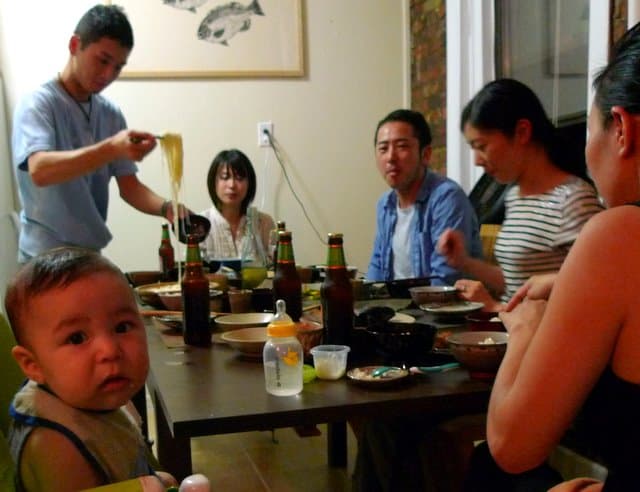
Too bad baby Gen can only eat mashed rice: The chefs of the fabulous Kajitsu and their wives came over to our place in Brooklyn the other night for an impromptu Japanese dinner party, and I wish Gen could have tasted the amazing spread.

At Sunday's miso workshop at En Japanese Brasserie, Chef Hiroki Abe introduced a couple of fabulous, fast and easy miso dipping sauces that I wanted to share with you.
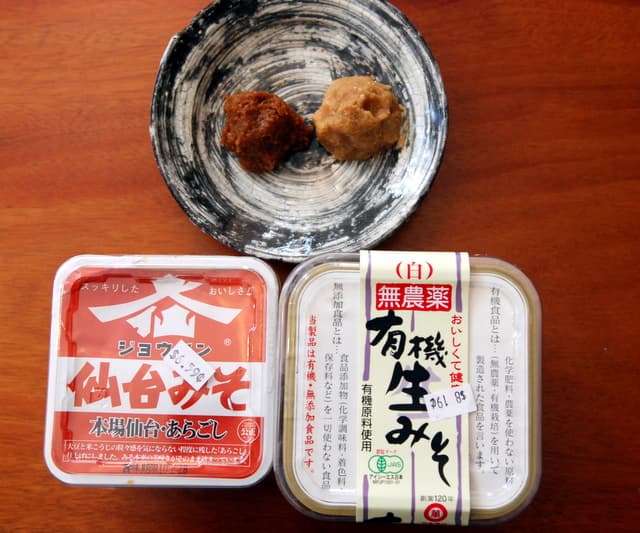
We covered some fantastic miso soup in my latest miso soup post, but what about the ingredients that might be unfamiliar? To help you navigate Japanese markets and find these gems, I wanted to share a trio of photos of key ingredients I mentioned.
Earlier this month, Gourmet.com ran my story on robata style grilling, which I put together thanks to Chef Jiro Ida of the terrific midtown Manhattan restaurant Aburiya Kinnosuke. Over the course of a few weeks, Jiro-san graciously invited me to his kitchen before service to watch him in action and teach me about robata.
When Atsushi and I visited New York's Union Square farmers market together we found lovely okra as well as fresh carrots and white Japanese turnips (kabu). I asked Atsushi to prepare a simple dish to bring out their natural, peak-of-season flavors, so he decided to simmer them in dashi, and add a touch of usukuchi shoyu to give the vegetables a little saltiness.
Shin Hatakeyama, a chef who is the manager of Sunrise Mart, the Japanese food market in Manhattan (the one at 494 Broome Street), has made a commitment to importing top-quality, authentic ingredients from Japan. Yesterday he invited Daigo Irifune of Yamaya USA to showcase his company's mentaiko. What's mentaiko?
After completing our four day trek along Shikoku's pilgrimage trail (see posts below), my girlfriend and I gave our aching feet a rest and rented a car to explore the island. Shikoku was a revelation: A rugged, breathtaking region with dramatic rocky coastline and towering mountains in the interior. I fell in love with this place, my first time there. We drove along the Pacific from Tokushima City to Kochi City over two days, then headed inland to the remote Iya Valley, where we relaxed at the fantastic Kazurabashi Onsen. Along the way we discovered (or at least I discovered, my girlfriend knew all about them) Japan's amazing network of local markets.
Along the Shikoku pilgrimage trail (see previous post) my girlfriend and I encountered the long tradition of hospitality offered to pilgrims called o-settai. We passed sheds stocked with thermoses of tea and mattresses for resting, benches with notes inviting henro to sit and rest. During the 30-kilometer leg between the 12th and 13th temples, we came upon a tiny farm stand along the road with varieties of citrus and, interestingly, homemade konyaku offered for sale on the honor system -- drop your payment into a jar. As we were checking out the goods, the farmers, an elderly couple named Mr. and Mrs. Abe, appeared and invited us into their home as an act of o-settai. We gratefully accepted this honor.
I became interested in sakekasu (or sake kasu) at Matsuri, the restaurant where I volunteer as a cook. Chef Ono prepares his delicious version of glazed black cod by first marinating the fish for several days in a mixture that includes sakekasu. I wondered about the effect of this ingredient. But before I get into this, let me pause for a quick definition:
After visiting nori seaweed farmers along the Ariake Sea, I wondered, naturally, about the final product. What is it exactly that makes good nori good? To find...
At 3 a.m., across a valley of dark and hushed rice fields, bright yellow lights suddenly appear on the horizon. I'm in a car with two friends, Yuki and...